


- News
- Announcements
Announcements

Current & archive

Supporting children who have parents with mental disorders in Tyrol: A mapping of existing Tyrolean support and societal structures
A recently started 4-year research project aims at improving the situation of children who have mentally ill parents in Tyrol. For developing practice approaches to better identify and support these children and their parents, we need an in-depth understanding of the regional Tyrolean characteristics in terms of existing support structures and the societal context they are embedded in. The report gives an overview on the socio-economic and demographic context in Tyrol and describes available in-kind and cash-benefits that may play a role in improving identifying and supporting the children and their families.
Publication: LBI-HTA Project report No. 103a: https://eprints.aihta.at/1180/
Contact: Ingrid Zechmeister-Koss

PET/PET-CT Evidence for need based planning in Germany and Austria
Hardly any other medical technology has been evaluated as often in the western countries as positron emission tomography (PET/PET-CT): this is an expression of uncertainty about the value of PET diagnostics in the care of patients. The present HTA report updates the evidence on oncological indications and adds neurological indications and inflammatory diseases to the LBI-HTA report from 2015. The report was conducted in cooperation between the TU Berlin and the LBI-HTA to provide an updated decision support for evidence-based PET/PET-CT planning in Germany and Austria.
Publication: LBI-HTA Project report No. 77/ Update: https://eprints.aihta.at/1178/
Contact: Claudia Wild & Nicole Grössmann

External stimulation of the trigeminal nerve for the prevention and acute treatment of episodic and chronic migraine
External trigeminal nerve stimulation (e-TNS) device produced by the manufacturer Cefaly is the intervention at stake. The mechanism of action is that e-TNS produces a micro-pulse on the upper branch of the trigeminal nerve (suborbital nerve) through an adhesive electrode that is placed on the forehead. The aim of the project is to perform a synthesis of evidence on the basis of a systematic literature search regarding effectiveness and safety of the e-TNS for the prevention and treatment of episodic and chronic migraine.
Publication: Decision Support Document No. 114: https://eprints.aihta.at/1177/
Contact: Michal Stanak

Horizon Scanning in Oncology - Reports
We are pleased to introduce our two new HSO reports.
DSD HSO No. 83
Pembrolizumab (Keytruda®) in combination with chemotherapy for the treatment of metastatic non-small-cell lung cancer (NSCLC)
DSD HSO No. 82
Nivolumab (Opdivo®) in combination with ipilimumab (Yervoy®) for the first-line treatment of patients with advanced RCC

Carbon ion beam radiotherapy (CIRT) for cancer treatment: a systematic review of effectiveness and safety for 12 oncologic indications.
The project aimed at elaborating possible cancer types, being an indication for carbon ion radiotherapy (CIRT). As such, clinical studies, analysing the use of CIRT for specific cancer types, were identified through a systematic literature search and were reviewed and reported in this project.
Furthermore, a systematic review on the effectiveness (mortality, morbidity) and safety of CIRT for 54 oncologic indications in 12 regions (i.e., skull base, eye, brain, ear-nose-throat, lung, gastrointestinal, bone and soft tissue, prostate, breast, kidney, nervous system, hematologic cancer) was conducted.
Publication: LBI-HTA Project report No. 101: https://eprints.aihta.at/1174/
Contact: Gregor Goetz

Evaluation of individual medical procedures 2018 - Reports
We are pleased to introduce our new reports.
Decison Support Documents 2018
-
DSD 109: Subcutaneous implantable cardioverter defibrillator (ICD)
https://eprints.aihta.at/1169 -
DSD 110: Lymphovenous anastomoses in patients with primary and secondary lymphoedema
https://eprints.aihta.at/1170 -
DSD 111: Allogeneic mesenchymal stem cells for Crohn’s disease-associated complex perianal fistulas
https://eprints.aihta.at/1171 -
DSD 112: Meniscal allograft transplantation for post-meniscectomy syndrome
https://eprints.aihta.at/1172 -
DSD 113: Baroreceptor activation therapy for treatment-resistant hypertension
https://eprints.aihta.at/1173
+ 3 Updates
-
DSD 20/4. Update 2018: Endobronchial valve implantation for emphysema
https://eprints.aihta.at/1166 -
DSD 37/1. Update 2018: High-intensity focused ultrasound for the treatment of prostate cancer
https://eprints.aihta.at/1167 -
DSD 44/3. Update 2018: (Percutaneous) left atrial appendage closure for the prevention of thromboembolic events in patients with atrial fibrillation
https://eprints.aihta.at/1168
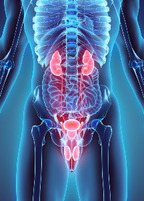
Stereotactic radiotherapy, proton therapy and irreversible electroporation for the treatment of localized prostate cancer
Irreversible electroporation (IRE, NanoKnife®) is a type of focal therapy which has been suggested as an alternative to radical treatment. It typically uses 3 to 5 electrodes which deliver short repetitive electrical pulses to destroy the cancer cells. Stereotactic radiotherapy (stereotactic body radiation therapy or SBRT) is a type of external radiation in which a higher radiation dose is delivered in a reduced number of fractions as is the case with conventional or moderately fractionated radiation therapy. Proton therapy (PT) is a further type of external radiation therapy which uses high doses of ionizing rays directed at the tumour. There is at present inadequate and insufficient evidence to show that IRE, SBRT and PT have either a positive impact on survival and quality of life or the ability to prevent or delay prostatectomy.
Publication: LBI-HTA Project report No. 107: https://eprints.aihta.at/1165/
Contact: Claudia Wild

Horizon Scanning in Oncology - Reports
We are pleased to introduce our two new HSO reports.
DSD HSO No. 81
Daratumumab (Darzalex®) in combination with bortezomib, melphalan and prednisone for untreated myeloma
DSD HSO No. 80
Osimertinib (Tagrisso®) for the initial treatment of EGFR-mutated advanced non–small-cell lung cancer (NSCLC)
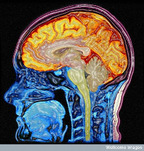
Options to identify inappropriate use of MRI, Part 3
The intention of the present MRI report, part 3, is to identify methods for the identification of inappropriate care. In addition, relations between MRI of lower extremities and subsequent (surgical) interventions are evaluated.
In total, we were able to identify 8 methodological approaches to detect in-appropriate care. All methods have certain strengths and weaknesses. The analysis of the relations of MRI to subsequent interventions showed that more knee replacements were in OECD in countries with higher MRI utilization rates. Finally, we were able to identify a series of refunding policies that could exert an influence on MRI utilization.
Publication: LBI-HTA Project report No. 80c: https://eprints.aihta.at/1159/
Contact: Robert Emprechtinger

Echocardiography: Guideline recommendations and options to identify inappropriate use as well as rate of use in Austria.
Aim of the report at hand is to describe the use of echocardiography in Austria and set it into context with the international literature on the appropriateness of echocardiography.
Repeated echocardiographic exams within one year are often related to inappropriate use. Some districts had notable differences in the ratio of over-all exams to repeated exams. With an increase in the number of overall exams there is a tendency for a higher percentage of repeated exams, especially for regions with very high rates of the use of echocardiography. Since the aim is to improve medical care, a discussion with the stakeholders should be conducted.
Publication: LBI-HTA Project report No. 98: https://eprints.aihta.at/1158/
Contact: Robert Emprechtinger